Storm & Emergency
My Tree Was Struck by Lightning — What Do I Do Now?
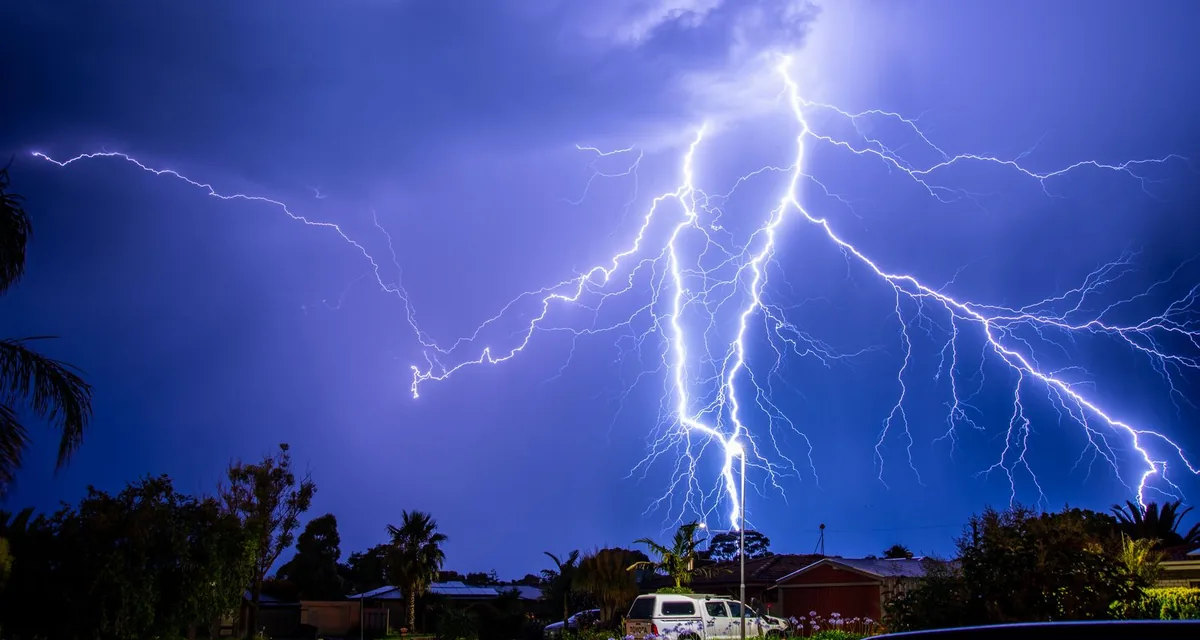
Florida leads the nation in lightning strikes and lightning-related deaths, and Gainesville sits right in the middle of the state’s daily summer thunderstorm pattern. If you’ve got mature trees on your property, odds are good that sooner or later, one of them is going to take a direct hit. The question is what happens after — and that’s where a lot of homeowners get stuck, because a lightning strike doesn’t always look like the dramatic, split-in-half tree you’re picturing.
Here’s how to tell what happened, what to do immediately after, and how to know whether the tree can be saved.
What a lightning-struck tree actually looks like
Lightning superheats the sap inside a tree almost instantly, turning it to steam. That steam has to go somewhere, and it usually blows outward through the bark. What that leaves behind ranges from obvious to easy to miss:
- A long vertical seam or strip of missing bark running down the trunk or a major limb — the most common sign
- A spiral or zigzag scorch pattern where the charge tracked down the trunk following the grain
- Charring or blackened bark, especially near the point of impact
- A split or cracked trunk, sometimes severe enough to see straight into the wood
- Debris on the ground — bark, splinters, or small branches blown loose by the blast
Some strikes are much subtler. A glancing hit might leave nothing more than a thin seam a few feet long, no charring, no obvious wound. That’s exactly why the “it looks fine” tree can still be in trouble.
The damage you can’t see yet
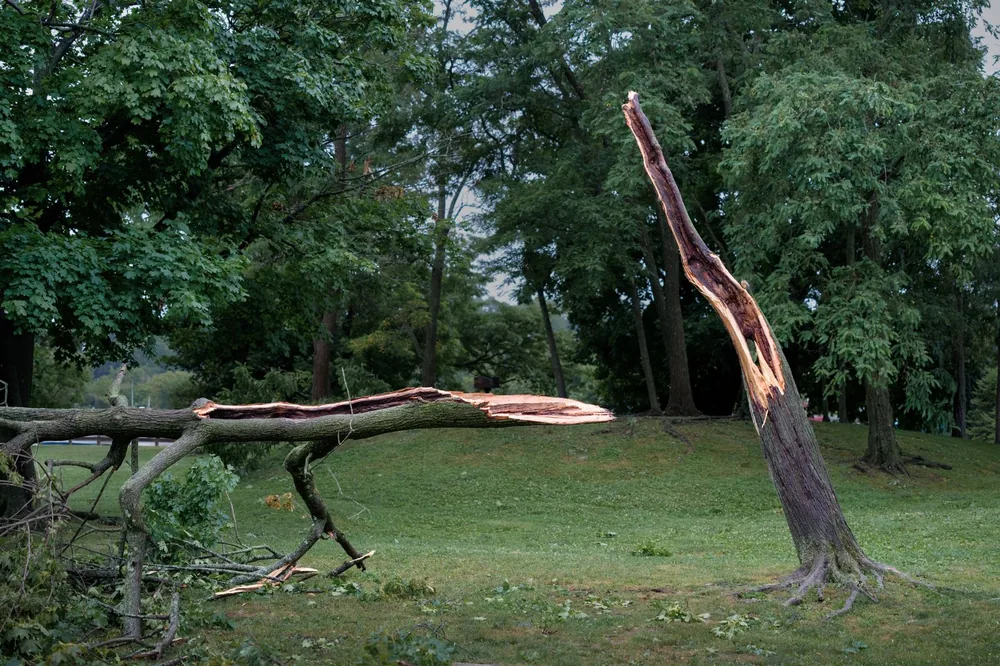
The visible bark damage is often the smaller part of the story. Lightning also travels down through the trunk into the root system, and root damage is nearly impossible to spot from the surface. UF’s own research on lightning damage in landscape trees notes that struck trees can die within days — or take months to show it. That’s why a tree that looks okay on day one can start declining weeks later — wilting or yellowing leaves, branches dying back one at a time, a canopy that thins out instead of leafing normally. If you’ve had a nearby strike and a tree starts looking “off” over the following month, that’s worth connecting back to the storm, not writing off as an unrelated problem — and it’s exactly the kind of change to watch for covered in signs your tree is a safety hazard.
What to do right after a strike
- Keep people and pets away from the tree. Current can travel through the root system into wet soil, grass, or anything touching the tree — a fence line, a shed, a deck. Treat the area as off-limits until it’s been checked.
- Don’t touch the tree or anything leaning on it, especially if it’s still storming.
- Photograph what you can see from a safe distance — it helps whoever assesses the tree understand what happened, and it’s useful for insurance if the tree threatens a structure.
- Call a licensed arborist, not a general landscaping crew. Lightning damage assessment means knowing what to look for below the bark, not just what’s visible on the surface.
- Don’t assume it’s fine just because it’s still standing. A structurally compromised tree can hold for days or weeks before failing, often without warning.
Save it or remove it?
This is the call a tree health assessment is built for — the same save-or-remove judgment call we walk through for trees leaning after a hurricane — and it usually comes down to a few factors:
- How much of the trunk circumference is damaged. A narrow seam is very different from a strike that girdles most of the trunk.
- Whether the split runs into the root flare at the base, which affects structural stability far more than damage higher up.
- Species and age. Some species compartmentalize damage and seal wounds well; older, already-stressed trees have less reserve capacity to recover.
- Proximity to your house, driveway, or power lines. A tree with moderate damage that’s 40 feet from anything is a very different risk calculation than one 10 feet from your roof.
A tree with a narrow, shallow strike and no other symptoms often just needs monitoring and time. A tree with a fully split trunk, major charring around most of the circumference, or a lean that developed after the strike doesn’t get to wait — that’s a tree removal call, and if it’s actively unstable or threatening a structure right now, it’s a job for emergency tree service, not something to put off.
Either way, plan on a follow-up check 4–6 weeks out. Damage that wasn’t obvious in the first 48 hours often is by then.
Why this matters more here than almost anywhere else
Gainesville’s location in North Central Florida puts it squarely in the path of the state’s near-daily summer thunderstorm cycle, and Florida has led the nation in lightning fatalities over the past decade. That same frequency means local trees take more direct and near-miss hits than trees almost anywhere else in the country — one more reason it pays to have an arborist who already knows what a Florida lightning strike looks like, rather than learning on your tree. It’s also worth folding into your hurricane prep checklist — the same summer storm season that brings lightning brings the wind that finishes off an already-weakened tree.
Struck a tree? We can tell you what you’re actually looking at.
The Wood Doctor has assessed lightning and storm damage across Gainesville, Micanopy, and Alachua County for over 10 years. If a tree on your property took a hit — or you’re not sure whether it did — we’ll give you a straight answer on whether it’s a save or a removal, no guesswork.
Request a free quote online or call us at (352) 816-0826.